Tickets
Museum Hours
Thurs: 1–8PM Fri–Mon: 10 AM–5 PM
Tue–Wed: Closed
Location
200 Larkin Street
San Francisco, CA 94102
415.581.3500
Tickets
Region

Japan

Filter Resources
Type
  • All
  • Activity
  • Artwork
  • Background Information
  • Lesson
  • Teacher Packet
  • Video
Grade Level
  • All
  • College and Beyond
  • Early Elementary School (K-3)
  • Elementary School (4-5)
  • High School (9-12)
  • Middle School (6-8)
  • Pre-Kindergarten
Sort Results
  • Reset
  • Title
  • Type
Filter Resources
Type
  • All
  • Activity
  • Artwork
  • Background Information
  • Lesson
  • Teacher Packet
  • Video
Grade Level
  • All
  • College and Beyond
  • Early Elementary School (K-3)
  • Elementary School (4-5)
  • High School (9-12)
  • Middle School (6-8)
  • Pre-Kindergarten
Sort Results
  • Reset
  • Title
  • Type
Filter
Clear
Filter resources by type
Filter resources by grade level
Sort resources by

Video

Noguchi and Hasegawa in Their Own Words

Discover how two artists seeking a new direction for modern art in the aftermath of World War II found inspiration in Japanese tradition. Trace the friendship, work, ideas and mutual influence of Isamu Noguchi and Saburo Hasegawa, who both sought to balance tradition and modernity, Japanese culture and foreign influences, past and present.

GRADE LEVEL: Middle School (6-8), High School (9-12), College and Beyond

Background Information

What Are the Main Branches of Buddhism?

Over the centuries, two main branches of Buddhism emerged: a transmission that traveled to Southeast Asia, and a transmission that evolved in East Asia. A further offshoot of the northern transmission also developed. All three branches began in India, and developed further as they moved across Asia.

GRADE LEVEL: Middle School (6-8), High School (9-12), College and Beyond

Background Information

Japanese Painting: Nanga and Bunjinga School

During the Edo period, Nanga (southern painting) or Bunjinga (scholar or literati painting) artists took a form of Chinese painting as their model. Learn more.

GRADE LEVEL: High School (9-12), College and Beyond

Background Information

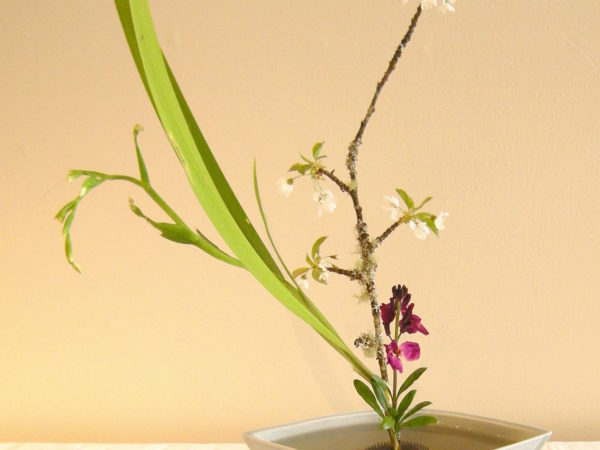
Japanese Floral Arrangement (Ikebana)

Learn about Japan’s refined form of floral arrangement, known as ikebana (“to arrange and give life to flowers”).

GRADE LEVEL: High School (9-12), College and Beyond

Background Information

Japan Encounters the West

European art and culture had a significant impact in Japan, both before and during the period of self-imposed isolation.

GRADE LEVEL: Middle School (6-8), High School (9-12), College and Beyond

Artwork

Katsura River-style Basket

Katsura River Style Flower Basket, approx. 1870-1920. By Iizuka Hosai I (1851-1916). Bamboo (madake), selected techniques: twill plaiting, diamond twill base. Lloyd Cotsen Japanese Bamboo Basket Collection, 2006.3.49.

GRADE LEVEL: Middle School (6-8), High School (9-12), College and Beyond

Background Information

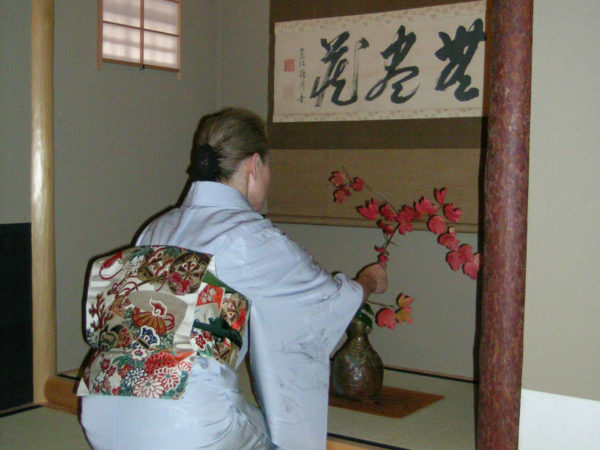
Teahouse Alcove (Tokonoma)

Learn about the objects found in the alcove (Japanese: tokonoma, pronounced “toe-ko-no-ma”) of a traditional Japanese teahouse and the traditions of the Japanese tea ceremony.

GRADE LEVEL: Middle School (6-8), High School (9-12), College and Beyond

Artwork

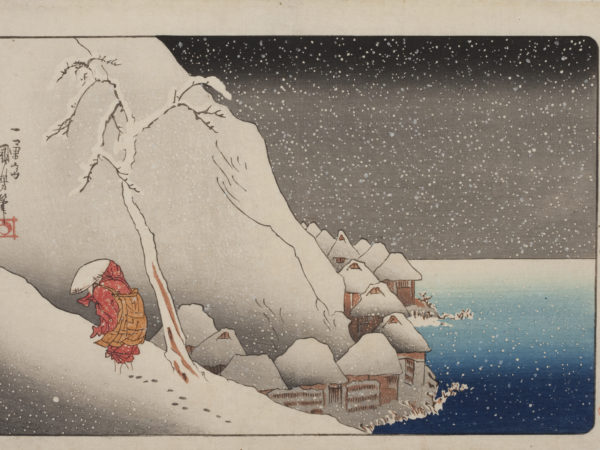
In the Snow at Tsukahara on Sado Island

In the Snow at Tsukahara on Sado Island (Sashu Tsukahara setchu) from The Illustrated and Abridged Biography of the Founder [Nichiren] (Koso goichidai ryakuzu), by Utagawa Kuniyoshi (Japanese, 1797-1861). Japan. Woodblock print; ink and colors on paper. Gift of the Grabhorn Ukiyo-e Collection, 2005.100.118.

GRADE LEVEL: Elementary School (4-5), Middle School (6-8), High School (9-12), College and Beyond