Artwork
Abbreviated Map of All the World's Nations, approx. 1800–1850
GRADE LEVEL: Middle School (6-8), High School (9-12), College and Beyond
Artwork
Background Information
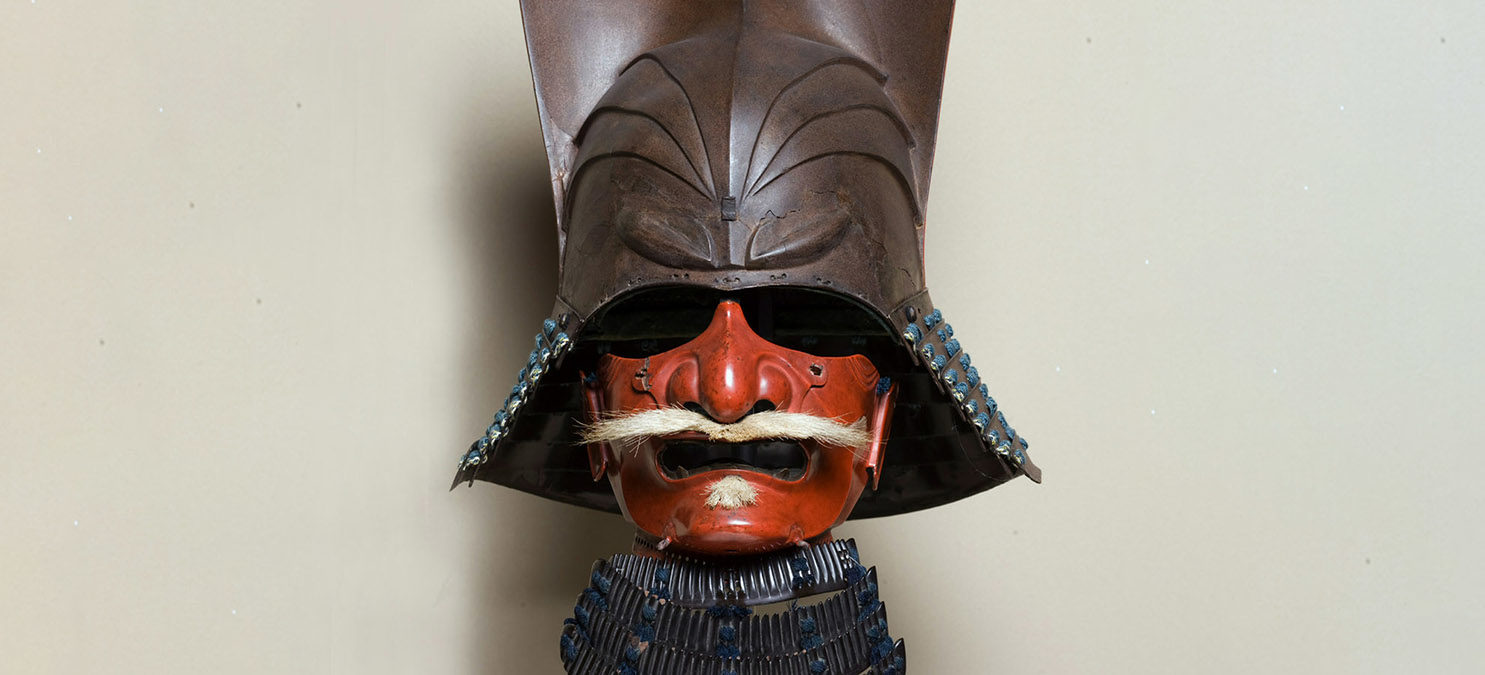
The samurai was expected to embody good character and ethical conduct. Learn more about the “way of the warrior.”
Background Information
Woodblock printmaking was a complex process involving the collaboration of several people: publisher, artist, carver, and printer.
Video
Storyteller, Ann Riley, tells a Japanese folktale about a mysterious teabowl with the use of artworks from the Asian Art Museum’s collection.
Video
Richard Hill and students demonstrate kendo, a Japanese martial arts form, at the Asian Art Museum’s educator workshop for the Lords of the Samurai exhibition on September 5, 2009.
Video
See demonstrations of employing both traditional (no electric needles!) and modern techniques. Joining Horitaka’s diverse, talented crew of tattooists are special guests from Japan — Shige, a powerhouse tattoo artist who has been showcased all over the world; Mutsuo, who’s designed for Bathing Ape and Hysteric Glamour; and Kazunobu Nagashima, a client of Shige who will proudly display his backpiece, which won a 2007 Milano Tattoo Convention award.
Video
Hailed as one of the most important photographers of our time, New York-based Japanese artist Hiroshi Sugimoto is also an accomplished architect. He approaches his work from many different perspectives, with architecture as one component in designing the settings for his installations. As a photographer of the highest technical ability, with equal acclaim for the conceptual and philosophical aspects of his work, Sugimoto has created works in his “Five Elements” series that are constructed as shrines to a primordial birthplace. Using geometric symbols from thirteenth-century Buddhism, Sugimoto encases a single image from his iconic Seascape series in each glass structure.
Video
Japanese artist and pop icon Fuyuko Matsui explores the haunted, interconnected realms of traditional and modern aesthetics. As one of the few women to have attained top training and mastery of traditional Japanese painting (nihonga) techniques in Japan, Matsui also cites centuries-old artistic influences, such as the iconoclastic eighteenth-century painter Soga Shohhaku and the fifteenth-century painter Soga Jasoku.
Video
In all lacquer objects, regardless of when they were produced, a resinous sap coating preserves the core material and allows for decoration. The material for lacquering is extracted from lacquer trees (Toxicodendron vernicifluum; formerly Rhus verniciflua), which is the same genus as poison oak. Learn more in this award winning documentary on Japanese lacquer.
Video
Mari L’Esperance reads a poem she wrote in response to seven paintings by Fuyuko Matsui in the exhibition Phantoms of Asia: Contemporary Awakens the Past (on view at the Asian Art Museum from May 18–September 2, 2012). This presentation was part of MATCHA. Co-presented by Litquake.