Artwork
Jar, approx. 1600
Jar, approx. 1600. Korea. Joseon Dynasty (1392-1910). Porcelain with transparent glaze. The Avery Brundage Collection, B60P110+.
GRADE LEVEL: Middle School (6-8), High School (9-12), College and Beyond
Artwork
Jar, approx. 1600. Korea. Joseon Dynasty (1392-1910). Porcelain with transparent glaze. The Avery Brundage Collection, B60P110+.
Video
See demonstrations of employing both traditional (no electric needles!) and modern techniques. Joining Horitaka’s diverse, talented crew of tattooists are special guests from Japan — Shige, a powerhouse tattoo artist who has been showcased all over the world; Mutsuo, who’s designed for Bathing Ape and Hysteric Glamour; and Kazunobu Nagashima, a client of Shige who will proudly display his backpiece, which won a 2007 Milano Tattoo Convention award.
Background Information
During the Edo period, Nanga (southern painting) or Bunjinga (scholar or literati painting) artists took a form of Chinese painting as their model. Learn more.
Video
Learn about Indonesian rod puppets (wayang golek) with puppet master Kathy Foley.
Artwork
Incense Container with design of plovers, 1500–1600. Japan. Muromachi period (1392–1573). Lacquered wood and sea shell. Gift by transfer from the Fine Arts Museums of San Francisco, B85M14.
Artwork
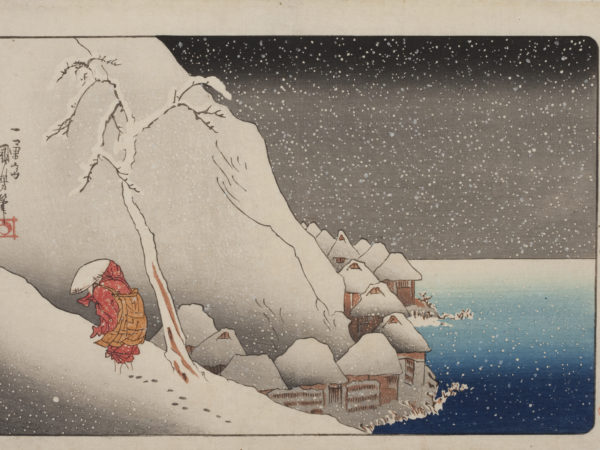
In the Snow at Tsukahara on Sado Island (Sashu Tsukahara setchu) from The Illustrated and Abridged Biography of the Founder [Nichiren] (Koso goichidai ryakuzu), by Utagawa Kuniyoshi (Japanese, 1797-1861). Japan. Woodblock print; ink and colors on paper. Gift of the Grabhorn Ukiyo-e Collection, 2005.100.118.
Video
Hailed as one of the most important photographers of our time, New York-based Japanese artist Hiroshi Sugimoto is also an accomplished architect. He approaches his work from many different perspectives, with architecture as one component in designing the settings for his installations. As a photographer of the highest technical ability, with equal acclaim for the conceptual and philosophical aspects of his work, Sugimoto has created works in his “Five Elements” series that are constructed as shrines to a primordial birthplace. Using geometric symbols from thirteenth-century Buddhism, Sugimoto encases a single image from his iconic Seascape series in each glass structure.
Background Information
Hindu temples are numerous in form, and probably evolved from a variety of sources, including the worship of natural sites, mounds, trees, due to the need for a place to conduct ritual practices and house images of deities. Learn more.
Background Information
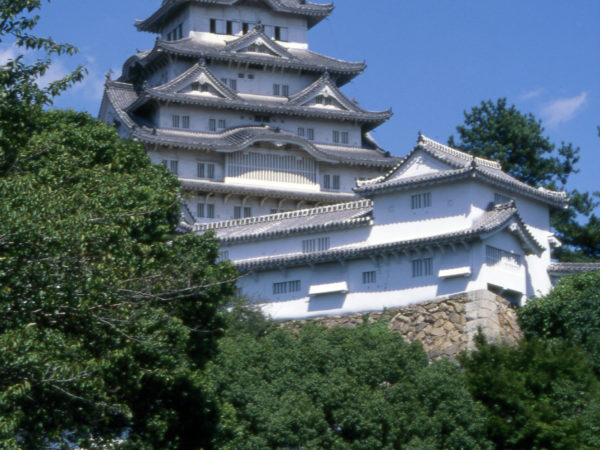
Himeji Castle is among the finest surviving examples of the defensive structures built in the sixteenth and early seventeenth centuries as samurai strongholds and symbols of power. Learn more.
Video
Learn more about hidden meanings in Chinese art from Asian Art Museum docent, Linda Lei. This talk was given to teachers from the Chinese American International School (CAIS) for their professional development day at the Asian Art Museum on August 23, 2011.