Background Information
Japanese Painting: Nanga and Bunjinga School
During the Edo period, Nanga (southern painting) or Bunjinga (scholar or literati painting) artists took a form of Chinese painting as their model. Learn more.
Background Information
During the Edo period, Nanga (southern painting) or Bunjinga (scholar or literati painting) artists took a form of Chinese painting as their model. Learn more.
Background Information
The Kano school, established by Kano Masanobu (1434–1530), primarily served the samurai class. Their bold designs of powerful animals and symbolic plants and trees, blending aspects of native Japanese with Chinese styles, were the perfect decoration for screens and sliding doors in the large official audience halls in samurai residences. Learn more.
Background Information
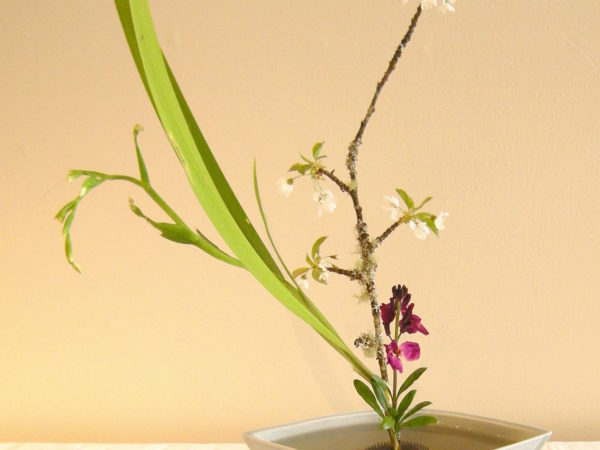
Learn about Japan’s refined form of floral arrangement, known as ikebana (“to arrange and give life to flowers”).
Video
Learn about Indonesian rod puppets (wayang golek) with puppet master Kathy Foley.
Video
Dancer and storyteller Pranita Jain from Kalapriya Center for the Indian Performing Arts leads a special interactive storytelling demonstration animating tales of King Vikramaditya with mudras (gestures) and facial expressions at the Asian Art Museum.
Artwork
Incense Container with design of plovers, 1500–1600. Japan. Muromachi period (1392–1573). Lacquered wood and sea shell. Gift by transfer from the Fine Arts Museums of San Francisco, B85M14.
Artwork
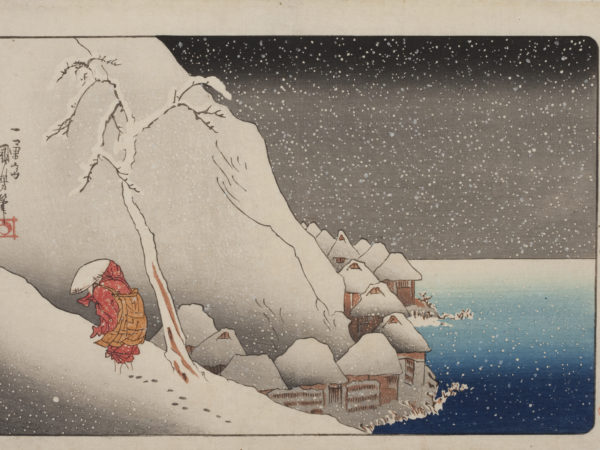
In the Snow at Tsukahara on Sado Island (Sashu Tsukahara setchu) from The Illustrated and Abridged Biography of the Founder [Nichiren] (Koso goichidai ryakuzu), by Utagawa Kuniyoshi (Japanese, 1797-1861). Japan. Woodblock print; ink and colors on paper. Gift of the Grabhorn Ukiyo-e Collection, 2005.100.118.
Background Information
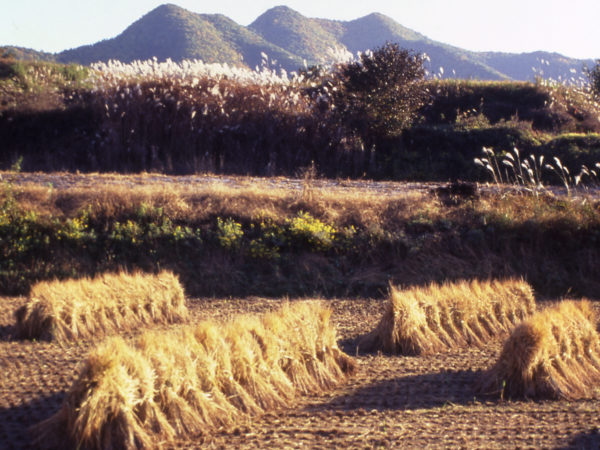
This image shows mountains and harvested rice in the autumn near the village of Andong in South Korea. Andong has been preserved as a traditional village, and exhibits both upper- and lower-class houses from the Joseon dynasty (1392–1910). The Korean peninsula is filled with mountains. Mountains form natural barriers and also create distinctive regions within Korea. Rice is a staple crop in Korea. Land formed the basis of wealth for most of Korean history. Rice was harvested not only for food, but also to pay for taxes.
Artwork
Illustrations of Buddhist texts and ritual formulas (Rashmivimla-vishuddhiprabhasa-dharani-sutra) (Mugujeonggwang Daedarani), 2001, by Dong-uArtist: Myeongcheon. Korea. Handscroll; sutra, gold on paper. Gift of Dong-u seunim, 2002.12.2.
Lesson
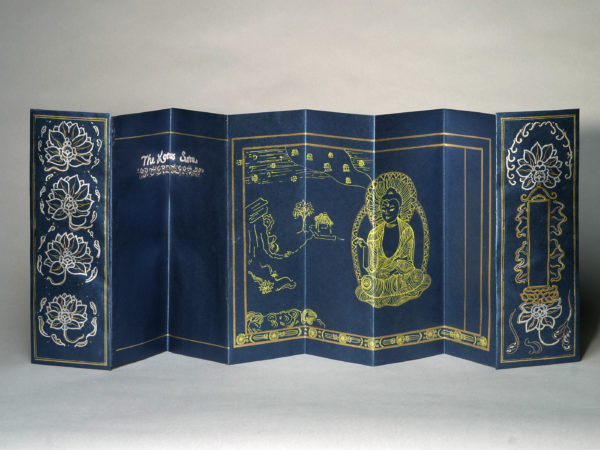
Students will: 1.) Identify the format and elements of a sutra. 2.) Examine why sutras (the teachings of the Buddha) are important historical and religious documents. 3.) Analyze why the writing of sutras is considered an important religious act. 4.) Construct and illustrate an accordion book manuscript based on the sutra format used during the Goryeo dynasty (Korea).