Lesson
The Spread of Buddhism Across Asia
Trace the spread of Buddhism through close looking at Buddhist objects from different regions. Explore how artifacts reveal distinct local traditions as well as common ideas and motifs.
Lesson
Trace the spread of Buddhism through close looking at Buddhist objects from different regions. Explore how artifacts reveal distinct local traditions as well as common ideas and motifs.
Video
Chin-Sung Chang, Associate Professor in the department of archaeology and art history at Seoul National University, gives a talk on the splendors of the royal family in late Joseon dynasty court paintings in conjunction with the In Grand Style: Celebrations in Korea Art During the Joseon Dynasty exhibition at the Asian Art Museum.
Video
The qipao is a stylish, sophisticated form-fitting dress that emerged in 1920s Shanghai. Meet Jane Zhu: she’s studied qipao patternmaking and construction from master tailors. Celebrated in Shanghai and New York for her contemporary, made-to-order luxury qipao, Zhu’s been featured in Vogue, Elle China, Harper’s Bazaar China, Newsweek, and more. She will share her qipao designs and give a talk on the history and craftsmanship of these iconic, versatile dresses.
Artwork
The River deity Ganga, approx. 800–900. India; Madhya Pradesh or Rajasthan state. Sandstone. The Avery Brundage Collection, B69S3.
Lesson
Lesson on the individual rituals performed by Muslim pilgrims during the hajj, the pilgrimage to Mecca.
Activity
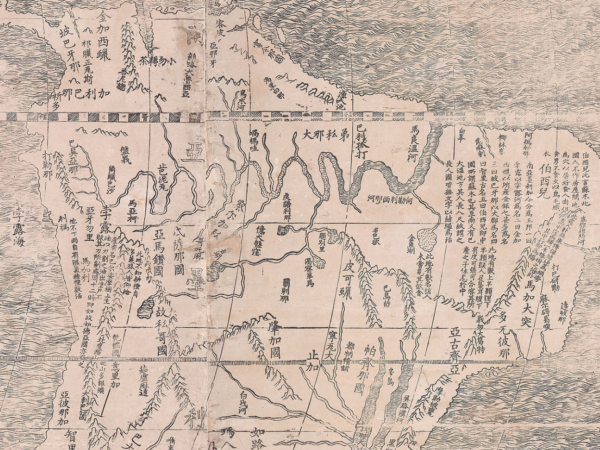
Explore this interactive map. Zoom-in on high resolution details and discover English translations of the classical Chinese text and synopsis by scholars.Explore this interactive map.
Background Information
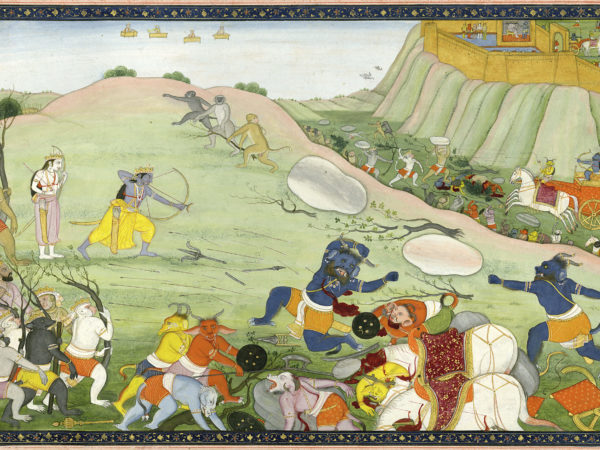
Learn about the main events and conflicts in the Rama epic.
Background Information
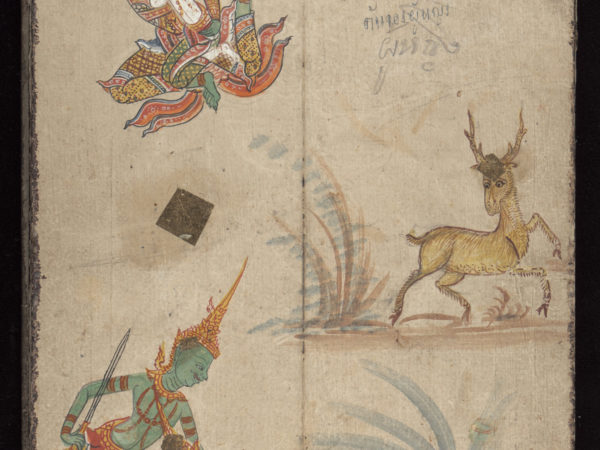
Why is the epic of Rama a beloved tale in many cultures across South and Southeast Asia? Explore how this story and its characters has remained significant in the lives of millions even today.
Video
This lustrous stoneware vessel is a ewer, or pitcher, dating to the early 1100s, during Korea’s Goryeo dynasty (918–1392). It was probably used for wine, which may have been warmed by placing the ewer in a matching bowl of heated water. The ewer’s color is called celadon, which is created by a glaze that includes iron oxide. Today, connoisseurs around the world continue to treasure Goryeo celadon as among the most precious items created by Korean artisans.
Video
Heman Chong imagines a future of dystopian stillness with Calendars (2020–2096), an installation of 1001 photos, each a calendar page capturing a moment of complete emptiness in today’s bustling areas of Singapore. View this work for yourself at the Asian Art Museum during the exhibition, Phantoms of Asia: Contemporary Awakens the Past (on view from May 18–September 2, 2012).