Artwork
Flowers and Birds of the Twelve Months
Flowers and Birds of the Twelve Months, one of a pair (1703), by Yamamoto Soken (1683-1706). Japan. Six panel folding screen; Ink and colors on silk. The Avery Brundage Collection, B60D82+.1.
Artwork
Flowers and Birds of the Twelve Months, one of a pair (1703), by Yamamoto Soken (1683-1706). Japan. Six panel folding screen; Ink and colors on silk. The Avery Brundage Collection, B60D82+.1.
Video
James Sobredo gives a talk on Filipino martial arts and martial artist Sergeant Leo Giron at the 2011 Filipino American History Month Celebration at the Asian Art Museum.
Artwork
Festivities of the Twelve Months, approx. 1700-1800. Japan. Handscroll; ink and colors on paper. The Avery Brundage Collection, B86D19.
Video
Learn about the festival in India for one of the most popular forms of the Goddess—Durga.
Artwork
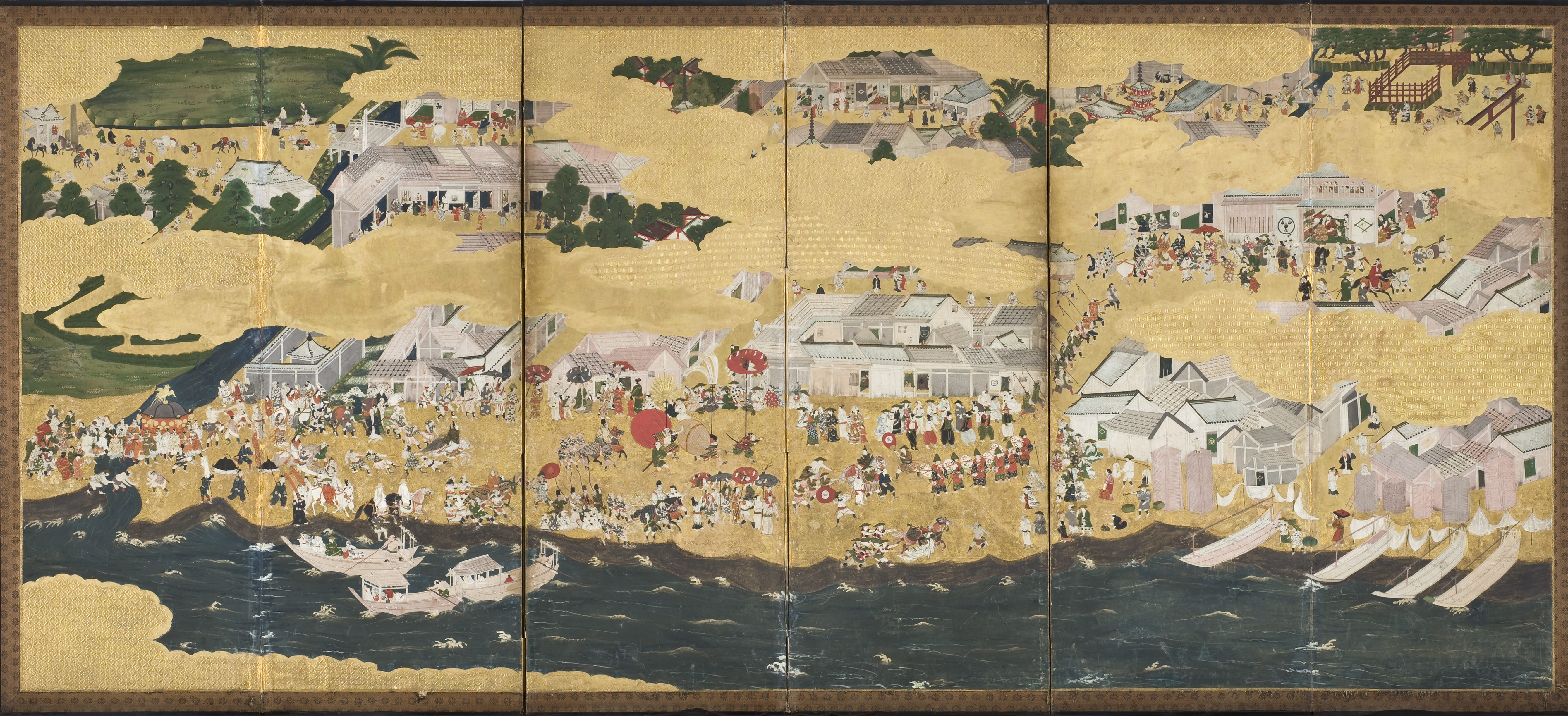
Festival of Sumiyoshi Shrine, one of a pair, 1650–1700. Six panel folding screen; ink, colors and gold on paper. Transfer from the Fine Arts Museums of San Francisco, Gift of Mrs. Herbert Fleishacker, B69D58.
Video
View this work in its entirety during Out of Character: Decoding Chinese Calligraphy (at the Asian Art Museum from October 5, 2012–January 13, 2013). The Character of Characters, 2012, by Xu Bing (Chinese, born 1955). Five-channel video animation installation. Acquisition made possible by The Robert H. N. Ho Family Foundation, R2012.54.
Artwork
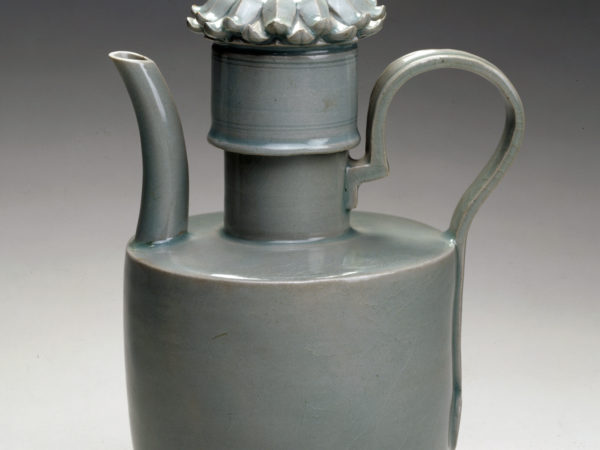
Ewer with lid, approx. 1050-1125. Goryeo dynasty (918-1392). Stoneware with blue-green (celadon) glaze. The Avery Brundage Collection, B60P123+.
Lesson
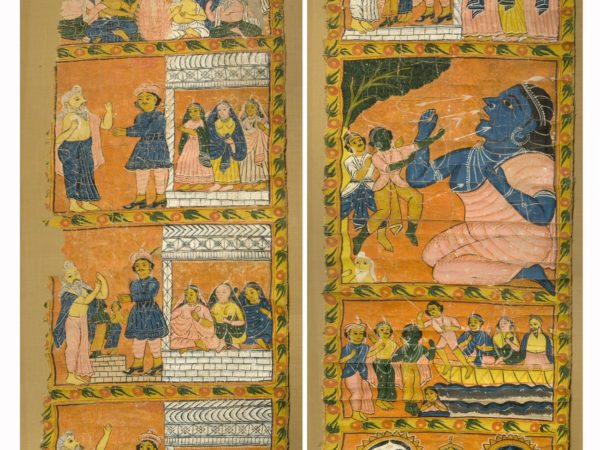
In groups, students will discuss how artists communicate events and characters by observing and describing scenes in the scroll containing stories of Rama’s youth. Students will compare the context of this scroll’s use with those of scrolls illustrating other epics. Then they will create a biographical scroll from the perspective of a character in the Ramayana (The Life of Rama).
Video
Asian Art Museum Curator, Joseph Chang, reads an excerpt from Eight Poems on Yellow Ridge in semicursive and cursive script, Xong Tingbi (1596–1625). Translation: It’s been called “Lotus Terrace” now for years innumerable; And round the terrace, fields upon fields of lotus leaves are seen. The slightest breeze wafts floating fragrance from the other shore, While setting sunlight in clear waters plays with emerald green. —Lotus Blossom Terrace. This work was on view at the Asian Art Museum as part of the exhibition, Out of Character: Decoding Chinese Calligraphy (from October 5, 2012–January 13, 2013).
Artwork
Decorated pages intended for a Koran, approx. 1500. Turkey. Manuscript page; Gold and colors on paper. Gift of Elton L. Puffer, 2004.67.